
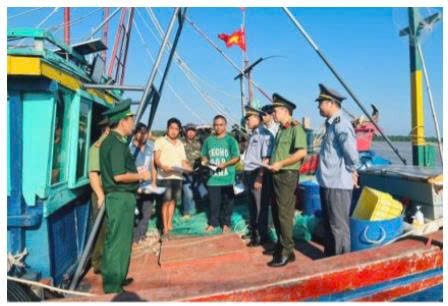
(TSVN) – On the morning of August 14th, at the Gia Lai Provincial Conference Center, the Ministry of Agriculture and Environment, in coordination with the Gia Lai Provincial People’s Committee, organized a national conference to implement the Action Plan to address the recommendations of the European Commission (EC) and launch a month-long campaign against illegal, unreported, and unregulated (IUU) fishing.
Attending the conference were Deputy Minister of Agriculture and Environment Vo Van Hung, Deputy Head of the National Steering Committee on combating IUU fishing; representatives from central ministries, departments, and agencies that are members of the National Steering Committee on IUU fishing; and leaders of the People’s Committees and Departments of Agriculture and Environment of coastal provinces and cities under the central government.
At the conference, delegates were briefed on Decision No. 1516/QD-TTg dated August 10, 2026, of the Prime Minister on the Action Plan to implement measures to address the EC’s recommendations from the 5th inspection on combating IUU fishing; and simultaneously launched a nationwide campaign to combat IUU fishing.
According to the Decision, combating IUU fishing, fully addressing the EC’s recommendations, and lifting the “Yellow Card” warning are identified as particularly important and urgent political tasks for the entire political system and society. This is not only a requirement for the fisheries sector but also linked to national prestige, the legitimate interests of fishermen and businesses, and the goal of sustainable development.
The action plan comprises 46 tasks, of which the Ministry of Agriculture and Environment is in charge of 27 tasks; the People’s Committees of provinces and cities implement 11 tasks, along with tasks from the Ministry of National Defense, the Ministry of Public Security, the Ministry of Foreign Affairs, and the Ministry of Culture, Sports and Tourism.
The tasks focus on key areas such as seafood traceability, fleet monitoring, law enforcement, improving the legal framework, and managing fishing vessels. Implementation must adhere to the “six clear principles”: clear personnel, clear tasks, clear timelines, clear responsibilities, clear authority, and clear results.
The nationwide campaign against IUU (Illegal, Unreported, and Unregulated) fishing will run from August 15th to September 15th, 2026. During this period, ministries, agencies, and localities will focus on addressing outstanding issues related to the registration, inspection, and licensing of fishing vessels; the installation and maintenance of vessel tracking systems (VMS); the control of fishing vessels entering and leaving ports; and the updating of fisheries data and traceability of seafood.
The goal is to ensure that 100% of eligible fishing vessels maintain VMS connectivity and declare information on the electronic traceability system; to prevent any fishing vessels from violating foreign waters; and to definitively resolve all outstanding violation cases.
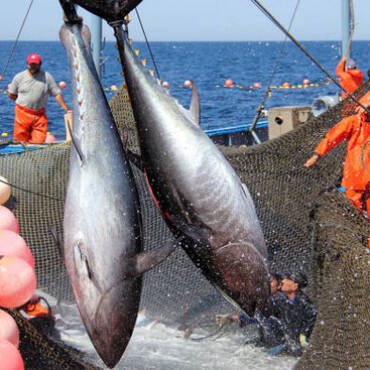
For shipments of tuna and swordfish exported to Europe, the requirement is that the documentation must be transparent and ensure there are no violations of IUU regulations.
At the conference, Mr. Tran Quoc Khanh, Deputy Director of the Department of Agriculture and Environment of Gia Lai province, said that the locality has a developed fishing industry, with a fleet of vessels operating in many fishing grounds throughout the country. The province currently has 5,738 registered fishing vessels 6 meters or longer, of which 54.7% are offshore fishing vessels.
Due to the extensive operation of the fishing fleet, with frequent movement between fishing grounds, management is challenging. Currently, more than 500 fishing vessels from Gia Lai regularly move between fishing grounds, anchoring, entering and leaving ports in southern provinces, and sometimes not returning to the locality for extended periods. This reality places high demands on the management of fishing vessels, control of fishing activities, and prevention of potential violations of foreign waters.
In response to this need, Gia Lai province has determined that combating IUU fishing must be implemented comprehensively, encompassing management, inspection, monitoring, and strict handling of violations, along with supporting fishermen in developing production, transitioning to other occupations, reducing fishing intensity, and applying technology in fisheries management.
The locality is also implementing a policy to provide financial support for the purchase and installation of equipment for fishing vessels with a length of 12 meters or more; addressing difficulties and ensuring the livelihoods of fishermen whose vessels do not meet the operating requirements.
Gia Lai has implemented measures such as “sea bans” for fishing vessels that do not meet operating requirements, strict management at mooring areas, and a decommissioning policy for vessels that are no longer needed or do not meet fishing requirements. These solutions aim to gradually restructure the fishing fleet, reduce fishing intensity, combine occupational chuyển đổi (transition), vocational training, and create alternative livelihoods for fishermen.
Concluding the conference, Deputy Minister of Agriculture and Environment and Deputy Head of the National Steering Committee on IUU Vo Van Hung emphasized that the Prime Minister’s issuance of Decision No. 1516/QD-TTg demonstrates a strong determination to address the EC’s recommendations and lift the “Yellow Card” warning, while affirming that this is a task directly linked to national prestige and the sustainable development of the fisheries sector.
The Deputy Minister requested that ministries, sectors, and localities base their actions on Decision No. 1516/QD-TTg and the conclusions of the conference to promptly develop or review and finalize implementation plans. For tasks with clearly defined authority and responsibility, units should not wait for further guidance but should organize implementation immediately.
According to the Deputy Minister, the plans of each agency and locality should focus on unresolved issues, tasks that are behind schedule, and problems that could directly affect the EC’s assessment results.
Each task must specifically define what needs to be done, the lead agency, coordinating agencies, the person responsible, the completion deadline, the output, and evidence of results. Assignments must be consistent with the functions, responsibilities, and actual conditions of each locality, ensuring that progress can be monitored, accountability checked, and results evaluated.
Deputy Minister Vo Van Hung expressed confidence that, with strong political determination and the responsibility of each agency, locality, and leader, the intensive campaign month will create substantive changes, contributing to the full implementation of the EC’s recommendations, laying the groundwork for lifting the “Yellow Card” warning in 2026, and building a transparent, responsible, and sustainable Vietnamese fisheries sector.
Add Comment