
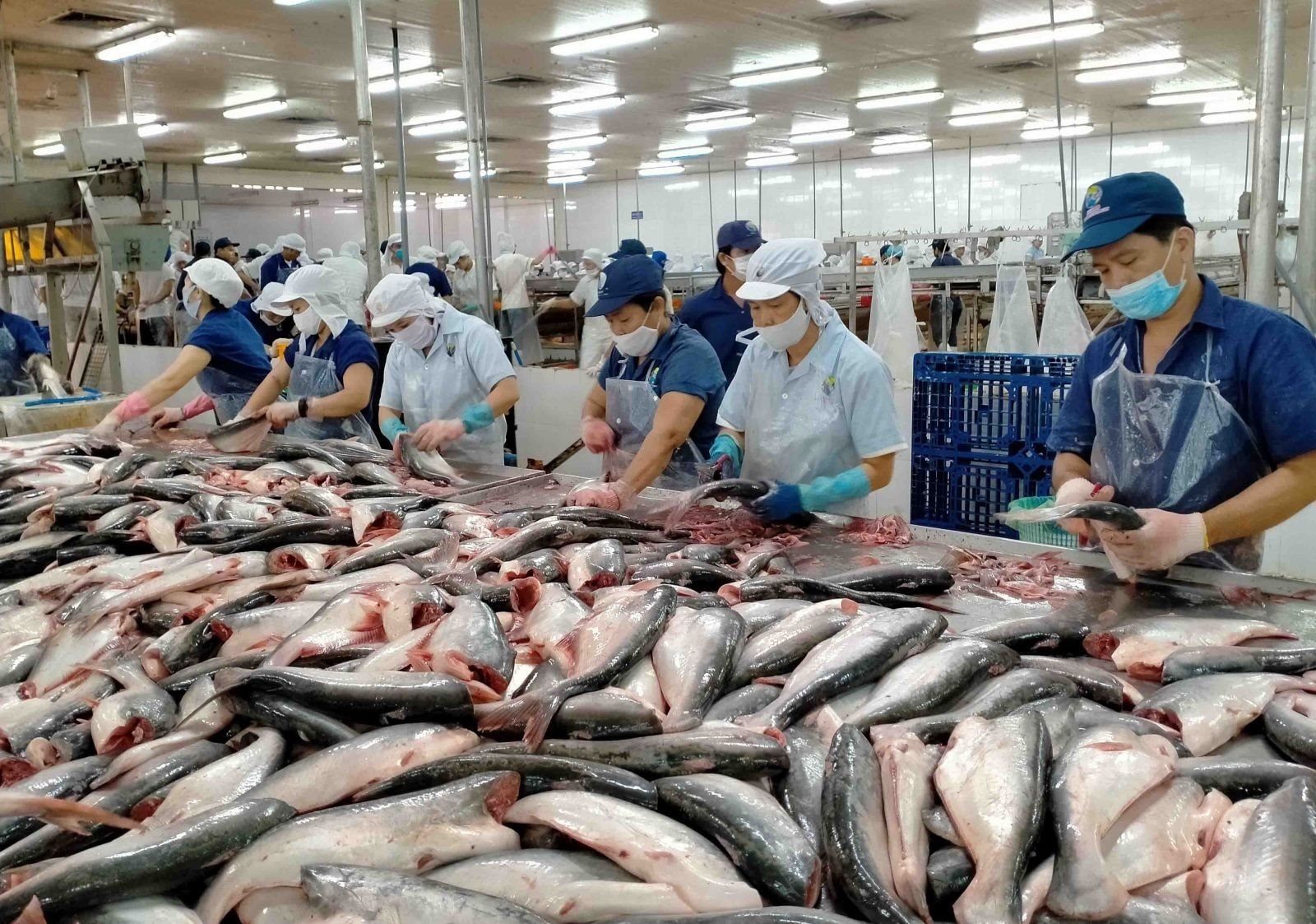
The Vietnam Association of Seafood Processing and Export (VASEP) has recently sent a document to the Government Office and relevant ministries and agencies, reflecting on a series of shortcomings in value-added tax (VAT) policies that are directly affecting the production, business, and export activities of seafood enterprises.
According to VASEP, since the Value Added Tax Law No. 48/2024/QH15 came into effect, the seafood industry has continuously faced difficulties in determining tax rates and processing tax refunds. In particular, the same type of processed seafood product may be subject to two different tax rates: no tax or 5%, depending on the source of supply. This inconsistency not only disrupts cash flow but also increases costs, undermining the competitiveness of Vietnamese businesses.
VASEP has requested the Ministry of Finance to consider reinstating ordinary processed seafood products to the category of goods exempt from VAT declaration, calculation, and payment, as previously stipulated in Decree 209/2013/ND-CP. According to the association, the current policy is creating a financial burden for businesses, especially when cash flow is “frozen” while awaiting tax refunds, affecting operational capacity and liquidity.
Another major obstacle is the new tax refund condition, which requires that the supplier has declared and paid taxes before the buyer is eligible for a refund. However, businesses lack the tools to verify the supplier’s tax obligations, leading to the risk of being denied a refund even after valid payment. Therefore, VASEP proposes allowing tax refunds if businesses have sufficient documentation and have not engaged in fraudulent activities. Simultaneously, it recommends developing an automated tax obligation verification system to increase transparency and reduce administrative procedures.
Regarding the tax rates on by-products such as fishmeal and fish oil – traditional ingredients for animal feed – VASEP stated that there is inconsistent application across localities. This is due to differing interpretations of the origin of the raw materials. The association recommends applying a uniform VAT exemption policy nationwide for this product group to ensure stability for the animal feed and aquaculture industries.
In the supply chain, many businesses cooperating with aquaculture farmers are facing difficulties due to unclear tax obligations and invoicing requirements for direct farmers or those engaged in contract farming. VASEP proposes clarifying regulations related to invoicing, as well as determining whether income from contract farming is exempt from VAT and personal income tax.
VASEP also pointed out that the new regulations on input tax allocation are creating an administrative burden, forcing businesses to allocate twice based on tax subjects and tax rates (0%, 5%, 10%). The association proposed abolishing the second allocation regulation and maintaining the old calculation method to reduce procedures. At the same time, it suggested leniency for minor declaration errors, especially for household businesses and newly established enterprises. Errors under 50,000 VND should not be penalized, in order to encourage entrepreneurship and support the transformation of the informal economy.
The fisheries sector currently generates approximately US$10 billion in exports annually, creating jobs for over 4 million workers. According to VASEP, to realize the Fisheries Development Strategy to 2030, with a vision to 2045, a rational, transparent, consistent, and stable tax policy needs to be developed. This is a key condition for the sector to maintain its competitive advantage, attract investment, develop sustainably, and make a positive contribution to socio-economic development, especially in coastal areas.
Add Comment